3. Mineral deposits from water
Mineral deposits are another frequent cause of dull floors, especially in areas with hard water. When water evaporates after mopping, minerals like calcium and magnesium remain on the surface as a fine, cloudy film. This mineral haze can look nearly identical to residue buildup but requires different treatment.
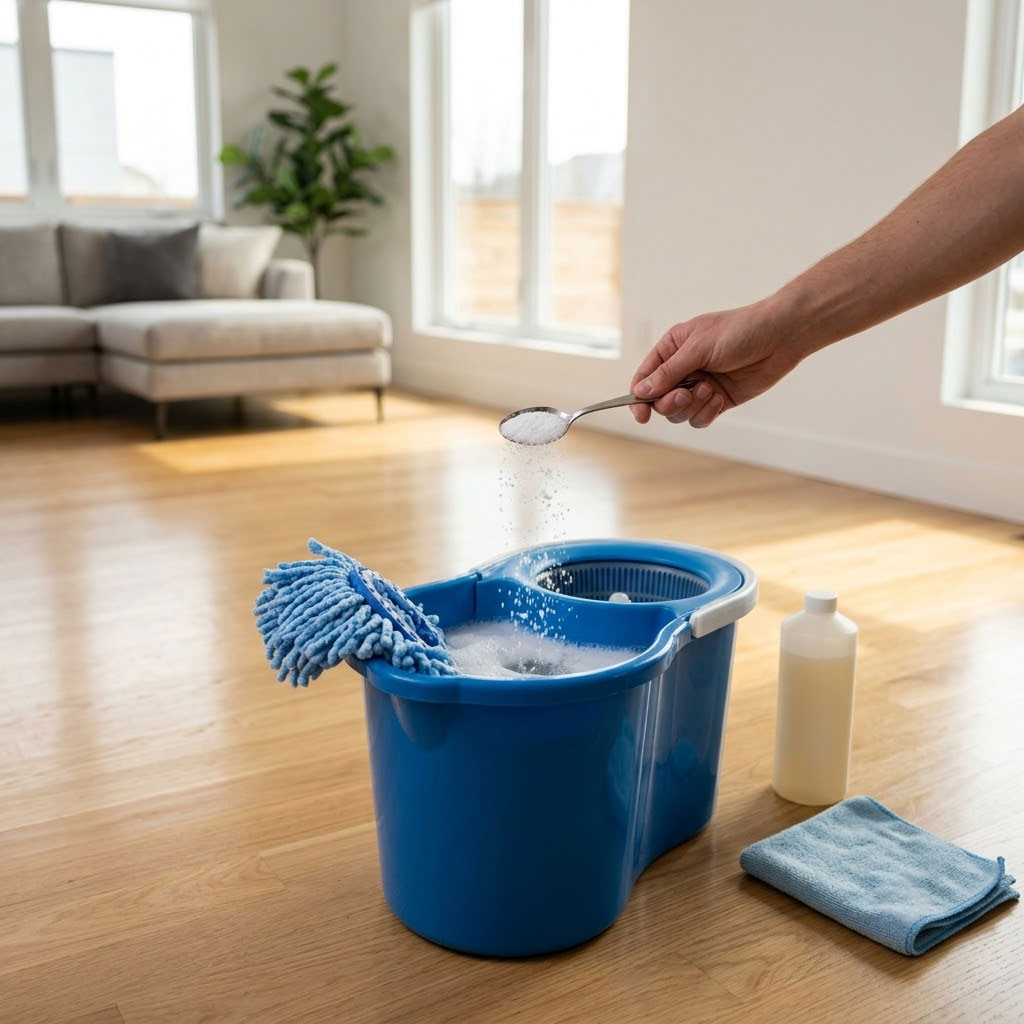
Using washing soda (sodium carbonate) can inadvertently worsen this problem. Washing soda raises water pH and binds calcium ions, causing calcium carbonate to precipitate onto the floor as white chalky deposits. While washing soda is effective as a degreaser on tiles and grout, it is not recommended for hardwood, laminate, or luxury vinyl floors.
Hardwood and similar floors typically require pH-neutral cleaners to avoid damaging the finish. High-pH solutions like washing soda can soften polyurethane coatings over time, dulling the surface and voiding manufacturer warranties.
If you suspect mineral deposits are causing dullness, rinse the floor with clean, distilled or filtered water and avoid hard water contact for routine cleaning when possible.
4. Overuse of cleaning products
Using excessive amounts of floor cleaner is a common mistake that leads to residue buildup and dullness. More product does not mean cleaner floors; in fact, overuse often leaves behind sticky films that attract dirt quickly, making floors look worse over time.
Always follow the dilution instructions on the cleaner’s label. Many floor cleaners are concentrated and require precise dilution to rinse effectively. Using too much detergent overwhelms your rinse water and leaves behind residues that accumulate with each cleaning.
In addition, avoid mixing multiple cleaning products or adding extra ingredients unless specifically recommended. Combining chemicals can create residues or damage floor finishes.
5. Using washing soda incorrectly
Washing soda, a strong alkaline cleaner with a pH around 11, is often promoted as a powerful floor cleaner. It can be effective on ceramic and porcelain tiles, grout, and sealed concrete, where its degreasing and water-softening properties help remove tough buildup.
However, washing soda is not safe for many common floor types such as hardwood, laminate, and luxury vinyl. These floors require pH-neutral cleaners to protect their finish. Using washing soda on these surfaces can cause premature finish wear, clouding, and void flooring warranties.
Additionally, washing soda causes calcium to precipitate out of hard water as chalk, leaving white mineral deposits that create a dull haze. This defeats the purpose of cleaning and can make your floor look worse.
Before using washing soda, check your floor manufacturer’s care guidelines. For sealed hard surfaces like tile and grout, it can be a useful occasional cleaner. For all other floors, stick to recommended pH-neutral products to maintain finish integrity.