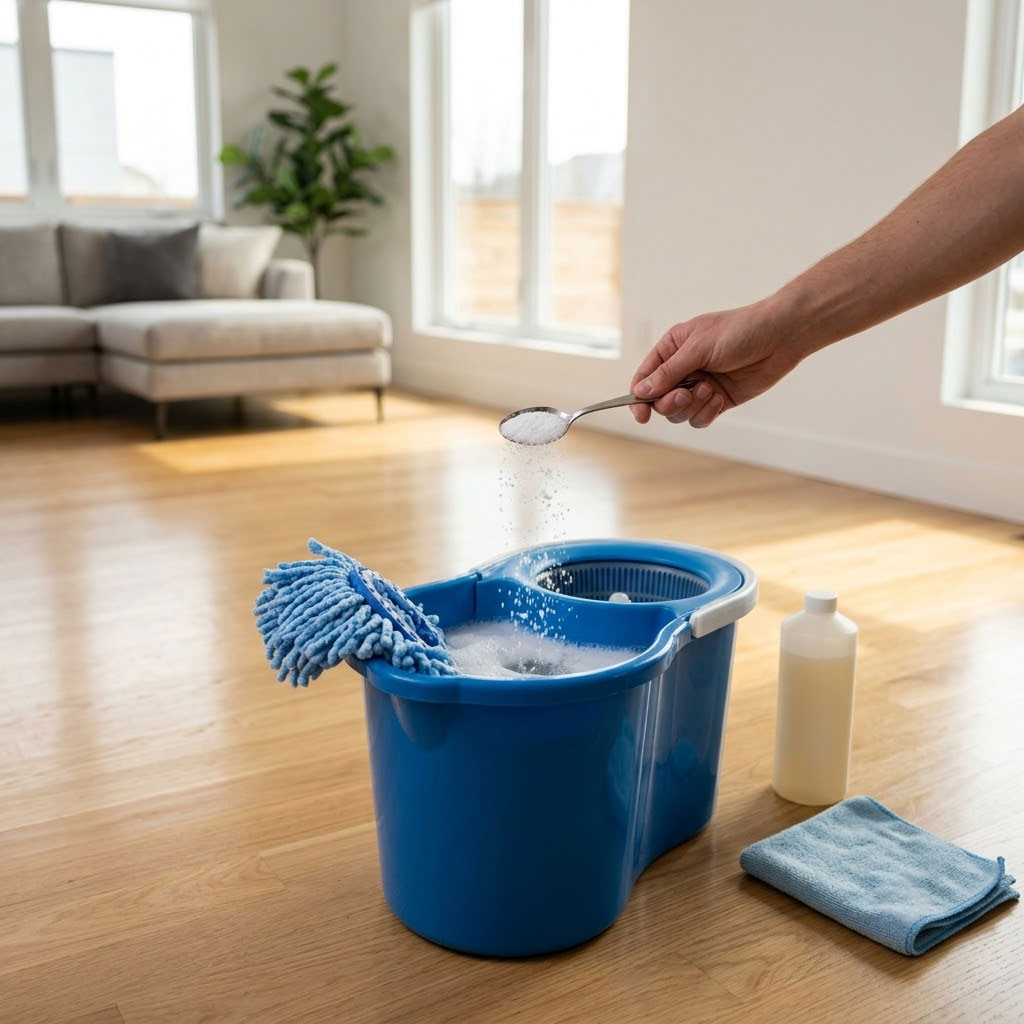
6. Poor mopping technique
Even with the right cleaning products, poor mopping technique can leave your floor looking dull. Common mistakes include using too much water, mopping large areas without changing water, and letting floors air-dry with excess moisture that attracts dirt.
Using excessive water can cause streaking and mineral deposits, especially on floors sensitive to moisture such as hardwood and laminate. Mop your floor in small sections, wringing out the mop until it is barely damp to avoid saturating the surface.
Never mop over dirt or grit. Always sweep or vacuum thoroughly before mopping to prevent scratching the finish and redistributing grime.
Allow floors to air-dry completely before walking on them to prevent footprints and streaks.
7. Dirty mop or water
Using a dirty mop or contaminated water is another frequent cause of dull floors. When mop heads accumulate dirt and oils, they spread grime rather than removing it. Similarly, dirty mop water redistributes muck rather than cleaning.
Change mop water frequently during cleaning sessions and wash reusable mop heads regularly according to manufacturer instructions. Replace disposable mop heads when they become soiled.
Clean mop heads and fresh water ensure that dirt is lifted and removed rather than spread back onto the floor.
8. Surface scratches and grit
Microscopic scratches caused by grit and abrasive particles embedded in footwear or pet nails can scatter light and reduce shine, giving the appearance of a dull floor even when clean. These scratches are invisible individually but collectively cause optical roughness.
Preventing scratches requires rigorous grit control:
- Use high-quality doormats at all entrances to trap dirt.
- Remove shoes indoors to reduce grit tracked in.
- Regularly trim pet nails and clean floors frequently to minimize abrasive particles.
If scratches are already present, refinishing or recoating the floor may be necessary to restore its gloss.