1. Residue buildup
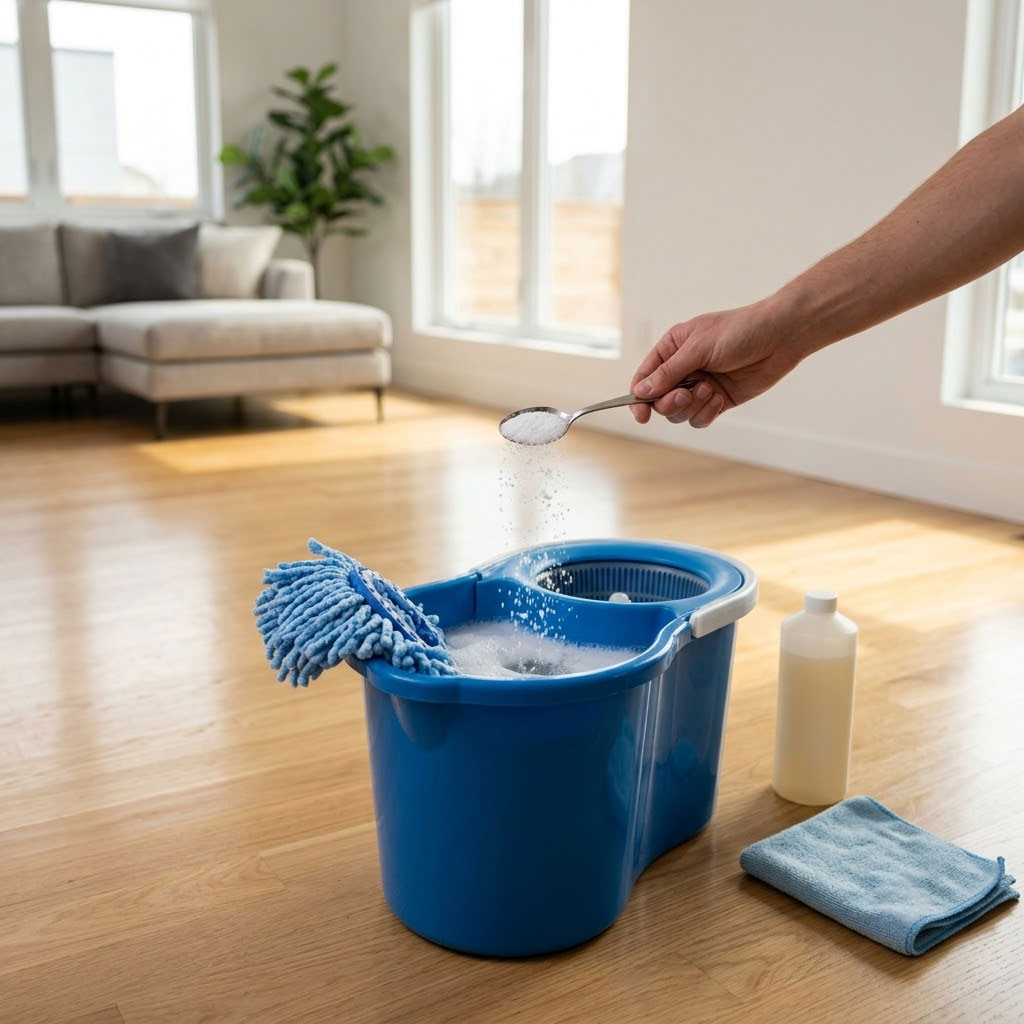
Residue buildup is one of the most common reasons a freshly mopped floor looks dull shortly after cleaning. This residue often comes from overusing cleaning products or using cleaners that leave a film behind. When detergent is added beyond the recommended dilution, it doesn’t rinse away completely and dries into a tacky layer that traps dust and footprints within hours.
Another frequent cause is the use of “shine-and-mop” products, which are actually acrylic polishes rather than cleaners. These products deposit a thin plastic coating that accumulates over time, becoming cloudy, yellowed, and prone to scuffing. This buildup masks the floor’s natural shine and can only be removed by professional stripping before refinishing.
To identify residue buildup, perform a simple test: clean a small, visible patch of floor using only hot water and a microfiber cloth wrung out well, without any soap. Wipe the area several times with clean sections of the cloth, then let it dry. If the cleaned patch appears noticeably brighter and shinier than the surrounding floor, residue is the culprit.
The good news is that residue buildup is fully reversible with thorough rinsing and minimal product use. Avoid over-dosing cleaners or relying on shine restorers, and instead focus on maintenance with clean water and microfiber mops.
- Use only the recommended amount of detergent.
- Rinse mop heads frequently and change mop water when it becomes dirty.
- Avoid shine-and-mop products unless professionally recommended.
2. Finish wear damage
Finish wear damage is less common but more serious. It occurs when the protective coating on your floor has been worn through, exposing the underlying material. Unlike residue, no amount of cleaning can restore a worn finish because the dullness originates in the floor’s surface texture, not on top of it.
You can test for finish wear with a simple water drop test: place a small drop of water on a dull spot. If the water beads up and remains on the surface, your finish is likely intact. If the water flattens, darkens the wood, and soaks in within minutes, the finish is compromised.
Finish wear is primarily caused by grit and dirt getting ground into the surface by foot traffic. These microscopic scratches scatter light, resulting in a dull appearance even when the floor is clean.
Addressing finish wear requires mechanical intervention:
- Screen and recoat: This process lightly abrades the old finish and applies a fresh protective layer. It usually costs between $1 and $2 per square foot and can be completed in a day. This is effective if the wear layer is thin but the wood beneath is undamaged.
- Full sand and refinish: If the finish is worn through to bare wood or stained, sanding down to the bare wood and applying new finish is necessary. This procedure costs approximately $3 to $8 per square foot and takes several days.
- Laminate and luxury vinyl floors: These have factory-applied wear layers that cannot be recoated. Once worn, replacement is the only option, typically costing $3 to $7 per square foot installed.
Proper grit control, such as using entrance mats and regular dust removal, can prolong the life of your floor’s finish and save thousands in refinishing costs.