Important: If your floor shows sudden discoloration or damage after cleaning, consider consulting a flooring professional to rule out serious issues.
Is Your Floor’s Dullness a Problem of Residue, Finish Wear, or Mineral Deposits?
If your floor still looks lackluster hours after mopping, it’s vital to identify what exactly is causing the dullness before buying more cleaners or trying new products. Most often, the issue isn’t dirt but one of three underlying problems — and only one responds to mopping.
Take two minutes to perform a simple test. Pick a small, visible patch of your floor and wipe it with a microfiber cloth dampened with plain hot water—no soap or cleaner. Wipe the area several times, using clean sections of the cloth each pass, then let it dry. If the spot appears noticeably brighter than the surrounding floor, you’re dealing with residue buildup, often from overused detergent or layers of old acrylic polish. This residue traps dust and footprints quickly, making your floor look dull despite being clean.
On the other hand, if the patch remains dull, the problem could be wear to the floor’s protective finish. A quick water test can help: place a drop of water on a dull spot. If it beads up, the finish is intact; if it soaks in and darkens the wood, the finish has worn through. This kind of damage results from grit and foot traffic scratching the surface, scattering light and causing dullness that no cleaner can fix. Repairs here require professional refinishing, which can cost from $1 to $8 per square foot depending on the severity and floor type.
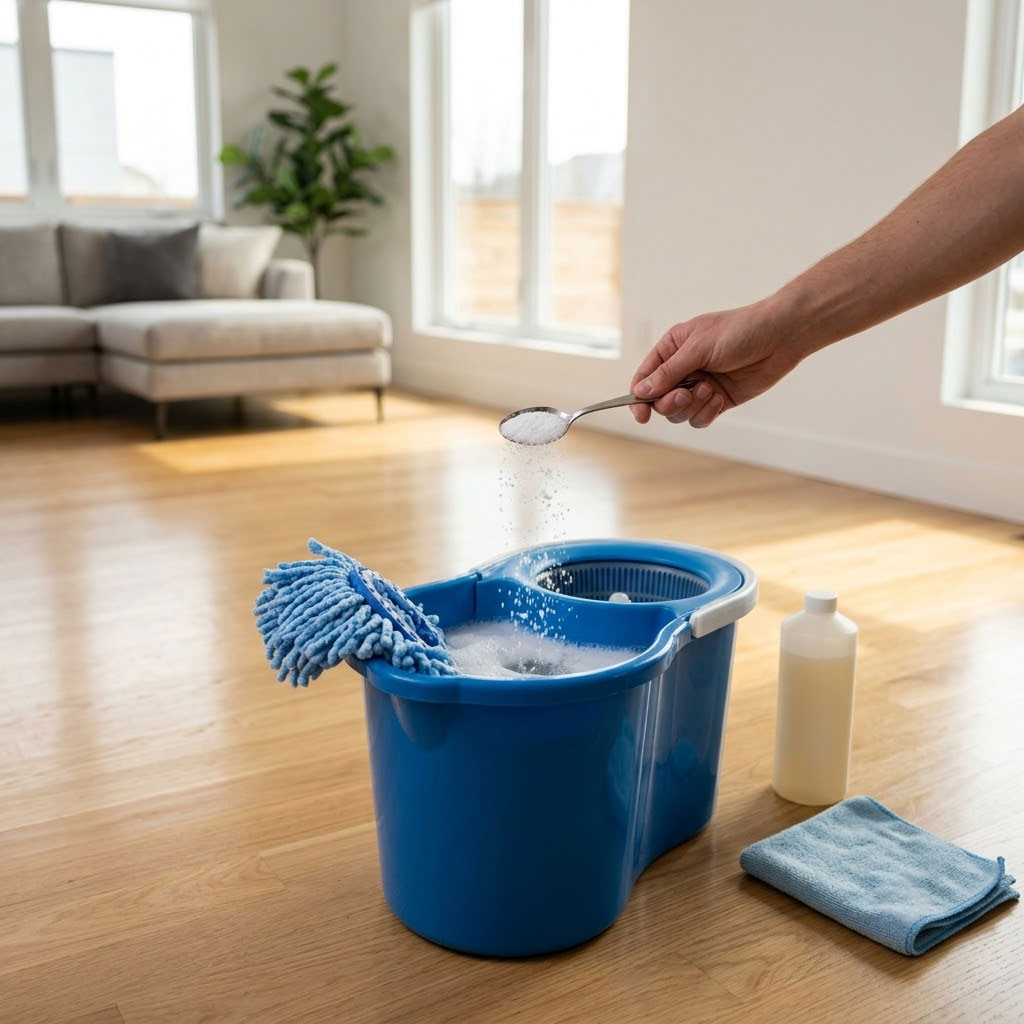
Lastly, mineral deposits from hard water can leave a fine film that looks like dullness but actually comes from calcium build-up as water dries. Using harsh alkaline additives like washing soda can worsen this by precipitating minerals onto the floor. While washing soda can be effective on ceramic tiles and sealed concrete, it is not safe for hardwood, laminate, or luxury vinyl floors and may void warranties.
Check Your Cleaning Products and Technique
Excess detergent is a common culprit in residue buildup. Many floor cleaners recommend specific dilution ratios; exceeding these leaves a sticky film that attracts dirt. Shine-enhancing products marketed as “restoring” often contain acrylic polish layers that cloud over time and require professional stripping. Using the wrong products or applying them incorrectly can make dullness worse instead of better.
Cleaning technique matters more than stronger products. Using clean mop water, changing it frequently, and avoiding overwetting or walking on damp floors can prevent streaks and dull patches. Proper maintenance, including controlling grit at entrances and cleaning spills quickly, protects the finish and extends floor life.
Here are the 10 most common causes of floor dullness. Number 2 is the one that can cost you thousands if you don’t catch it early — and it has nothing to do with cleaning.