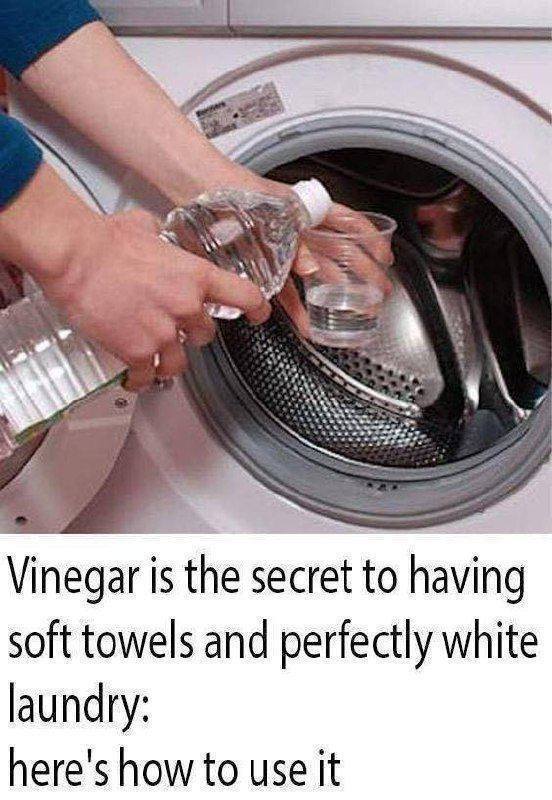
3. Run vinegar cycle
To clean the washing machine drum and internal components, run an empty wash cycle with white vinegar. Pour two cups (approximately 500 ml) of white vinegar into the detergent dispenser and select the hottest, longest cycle available on your machine.
This vinegar cycle helps to dissolve soap scum, mineral deposits, and mildew buildup inside the drum and internal pipes, leaving the machine cleaner and reducing odors. Do not add detergent during this cycle.
Important: Avoid using vinegar together with bleach or other harsh chemicals, as mixing can produce harmful gases.
After the vinegar cycle completes, leave the washing machine door open for a few hours to allow the interior to dry completely and prevent mold growth.
4. Wipe machine exterior
Once the internal cleaning is done, wipe down the exterior surfaces of the washing machine. Mix equal parts white vinegar and water in a spray bottle and apply it to a microfiber cloth or mop. Wipe all surfaces, including the control panel, door, and sides.
The vinegar solution removes dust, detergent splashes, and grime without leaving streaks, and it naturally disinfects the surfaces. Avoid spraying vinegar directly onto electronic controls or screens; instead, spray the cloth first.
Where not to use: Do not use vinegar on natural stone or marble finishes, as its acidity can etch and damage these surfaces.
5. Use vinegar for room cleaning
Extend the benefits of vinegar by using it to clean the laundry room environment. Vinegar’s antimicrobial properties make it effective for cleaning sinks, countertops, and floors.
Mix one part white vinegar with three parts water and use this solution to mop floors or wipe down surfaces. For sinks and laundry tubs, sprinkle baking soda first, then spray with vinegar solution to create a fizzy reaction that helps break down grime and deodorize.
Why it works: Vinegar’s acidity breaks down mineral deposits and soap residues while inhibiting bacterial growth, helping maintain a fresher laundry space.
Where not to use: Avoid using vinegar on hardwood floors without testing a small area first, as it may damage finishes.





