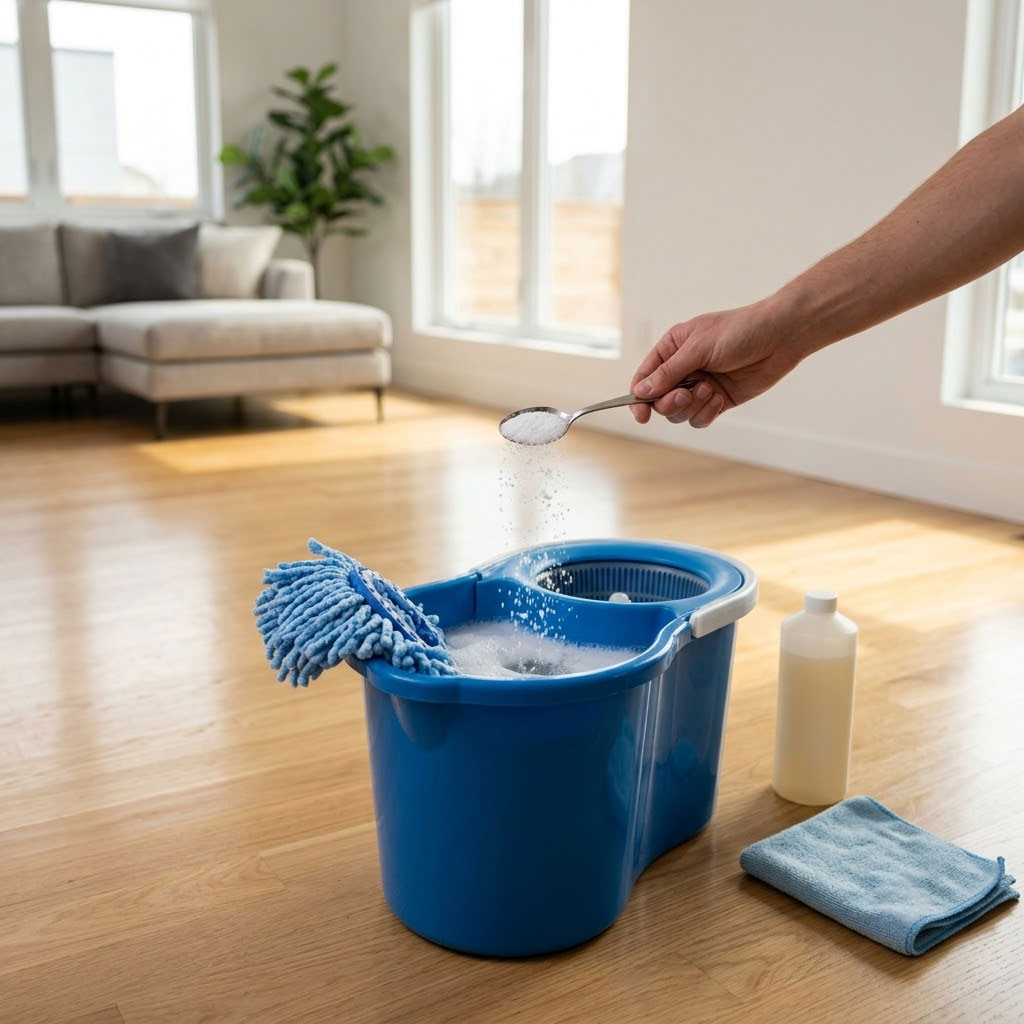
9. Wrong cleaner for floor type
Choosing the appropriate cleaner for your specific floor type is critical to maintaining its shine and durability. Different materials require different pH levels, ingredients, and cleaning methods. Using the wrong product can dull finishes, cause damage, or void warranties.
For example:
- Hardwood: Requires pH-neutral, non-abrasive cleaners that protect polyurethane finishes.
- Laminate: Similar to hardwood, avoid high-pH or oil-based products which can damage the surface.
- Luxury vinyl: Use gentle, manufacturer-recommended cleaners to avoid stripping wear layers.
- Ceramic and porcelain tile: Can tolerate stronger alkaline cleaners like washing soda for grout cleaning.
- Natural stone: Needs pH-neutral or specially formulated stone cleaners to prevent etching and discoloration.
Always consult your flooring manufacturer’s care guidelines before purchasing or using any cleaning product.
10. Preventive care tips
Maintaining floor shine is easier and more cost-effective than restoration. Implement these preventive care tips to keep your floors bright and damage-free:
- Use doormats at every entrance to reduce dirt tracked inside.
- Sweep or vacuum regularly to remove grit before mopping.
- Mop with clean, warm water and appropriate cleaner, following dilution instructions.
- Change mop water frequently and clean mop heads regularly.
- Mop in small sections, avoiding excess water on the floor.
- Allow floors to air-dry fully before walking on them.
- Clean spills immediately to prevent staining and sticky buildup.
- Avoid using high-pH cleaners like washing soda on sensitive floors.
- Inspect your floor finish periodically and arrange professional refinishing when wear is detected.
When to See a Professional
If your floor remains dull despite proper cleaning technique and product use, or if the water drop test indicates finish wear, it is time to consult a flooring professional. They can assess whether your floor requires screening and recoating, full sanding and refinishing, or replacement. Early intervention can save significant costs and extend the life of your floors.
Conclusion
Understanding why your floor looks dull after mopping is key to choosing the right solution. Residue buildup and mineral deposits can be resolved with proper rinsing and appropriate cleaners, while finish wear requires professional treatment. Avoid overusing cleaning products, using washing soda incorrectly, and poor mopping techniques to maintain your floor’s shine.
By selecting the correct cleaner for your floor type and following preventive care best practices, you can keep your floors looking vibrant and avoid costly refinishing.
This information is for general guidance. For specific floor care advice or concerns about floor damage, consult a flooring professional or your floor manufacturer.