7. Bone or Joint Discomfort
Chronic bone or joint pain can sometimes indicate inadequate calcium levels affecting bone strength and remodeling. Calcium is a primary mineral in bone tissue, working alongside magnesium and vitamin D to maintain skeletal integrity.
Long-term calcium deficiency may increase the risk of osteoporosis or fractures, especially in older adults or those with limited dietary intake. Joint discomfort may also arise due to muscle cramps or spasms related to mineral imbalances.
- Ensure adequate calcium intake from diverse sources including dairy, leafy greens, and fortified foods.
- Engage in weight-bearing exercise to support bone density.
- Discuss persistent bone or joint pain with your healthcare provider; they may recommend bone density testing.
8. Magnesium-Rich Foods
Addressing low magnesium through diet is a practical and effective step. Foods naturally high in magnesium support muscle and nerve function without the risks associated with supplements unless medically indicated.
Incorporate these magnesium-rich options into your daily meals:
- Leafy green vegetables such as spinach and Swiss chard
- Nuts and seeds, including almonds and pumpkin seeds
- Whole grains like brown rice and quinoa
- Dark chocolate with high cocoa content
Combining these foods with adequate hydration and balanced potassium and calcium intake helps restore mineral balance and reduce symptoms.
When to See a Doctor
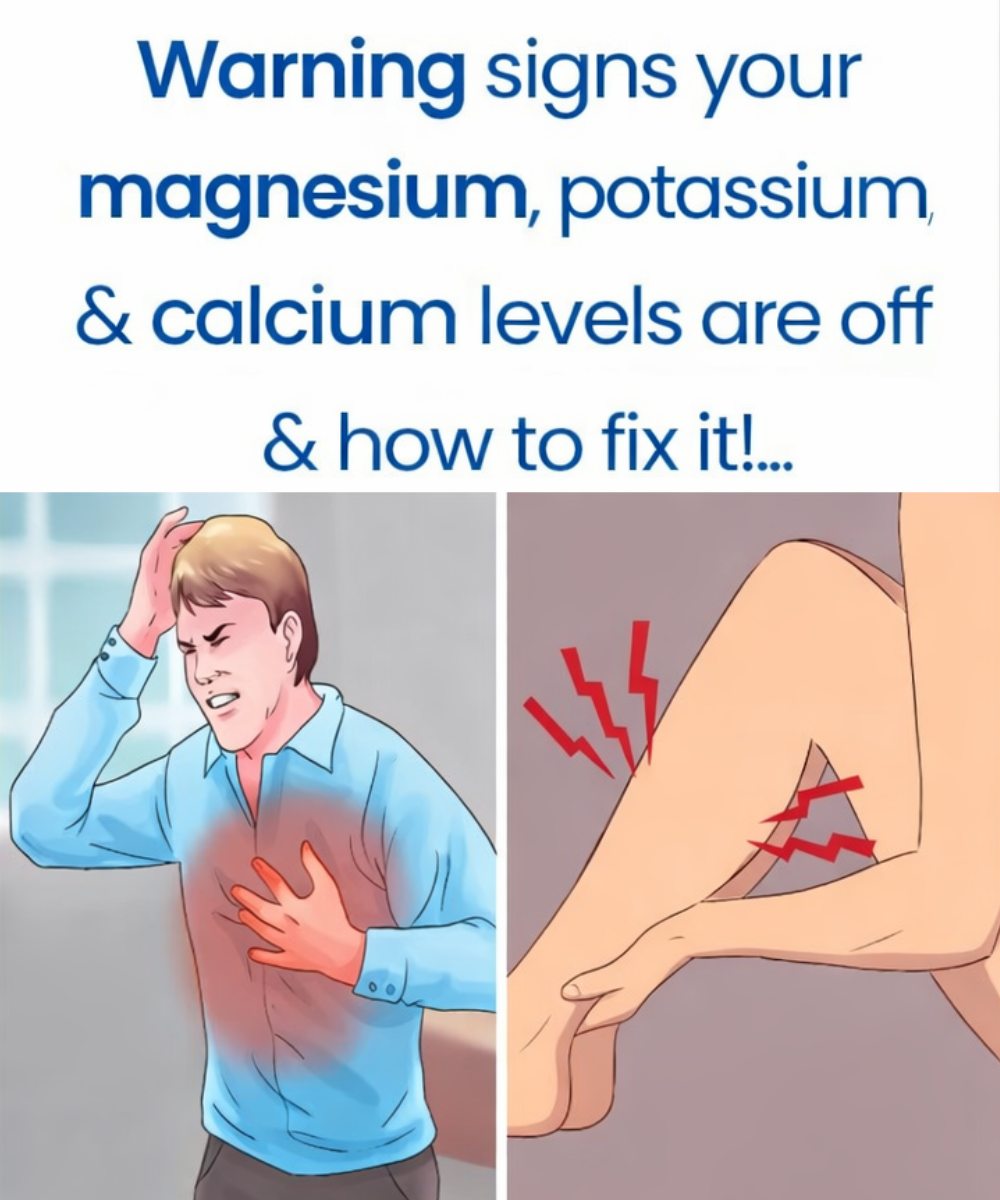
If you experience persistent or worsening symptoms such as muscle cramps, irregular heartbeats, significant weakness, or mood disturbances, it is important to seek medical evaluation. A healthcare provider can order blood tests to measure magnesium, potassium, and calcium levels and determine if supplementation or further treatment is necessary.
Seek immediate medical attention for severe heart palpitations accompanied by dizziness, chest pain, or shortness of breath.
Conclusion
Maintaining balanced levels of magnesium, potassium, and calcium is essential for muscle function, heart rhythm, energy, and bone health. Recognizing early warning signs and addressing them through diet and medical guidance can improve quality of life and prevent complications. Prioritize nutrient-rich foods while staying attentive to your body’s signals.
Always consult a healthcare professional before starting supplements or making significant dietary changes, especially if you have underlying health conditions or take medications.
This article is for informational purposes only and does not replace professional medical advice. Please consult your healthcare provider for personalized guidance.





