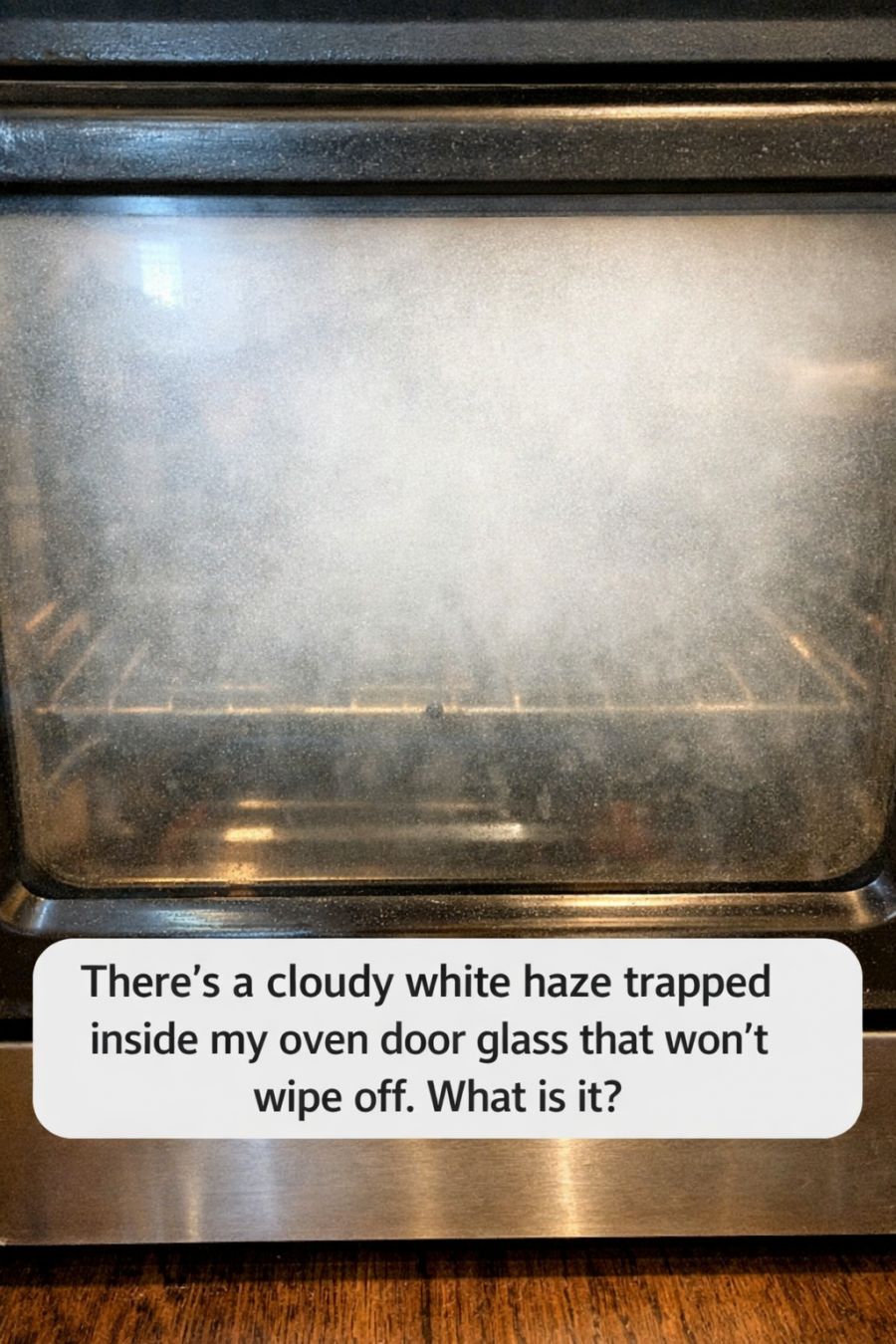
3. Other causes of haze
Besides mineral deposits, greasy residues, cooking steam, and leftover cleaning product film can cause or contribute to the haze inside your oven door glass. Grease splatters from roasting meats or fatty dishes can settle on the glass and bake on over time, adding to the cloudiness.
Steam from boiling or baking can carry dissolved cooking residues that deposit on the glass surfaces. Additionally, if cleaning agents are not fully rinsed off, their residue can leave a faint cloudy film. These factors may combine with minerals to worsen the visual haze.
4. Why it won’t wipe off
The haze is usually trapped between the glass panels of the oven door, a space that’s inaccessible from both the inside and outside surfaces. Oven doors are designed with multiple layers of glass for insulation and safety, creating a sealed cavity that resists moisture and heat transfer.
Moreover, the mineral deposits are baked-on due to repeated exposure to high temperatures, which fuses the film firmly to the glass. Because of this strong bonding and the sealed design, standard surface cleaning will not remove the haze.
5. How to identify the haze type
To distinguish mineral film from grease or smoke stains, examine the haze’s appearance. Mineral deposits form a uniform, white, chalky haze across the glass. Grease stains tend to be irregularly shaped with a yellowish or brown tint.
Smoke or soot from burnt food shows as darker, often patchy discoloration. If the haze is consistently white and evenly spread, it’s most likely mineral buildup. Variations in color or texture generally indicate other residues.





