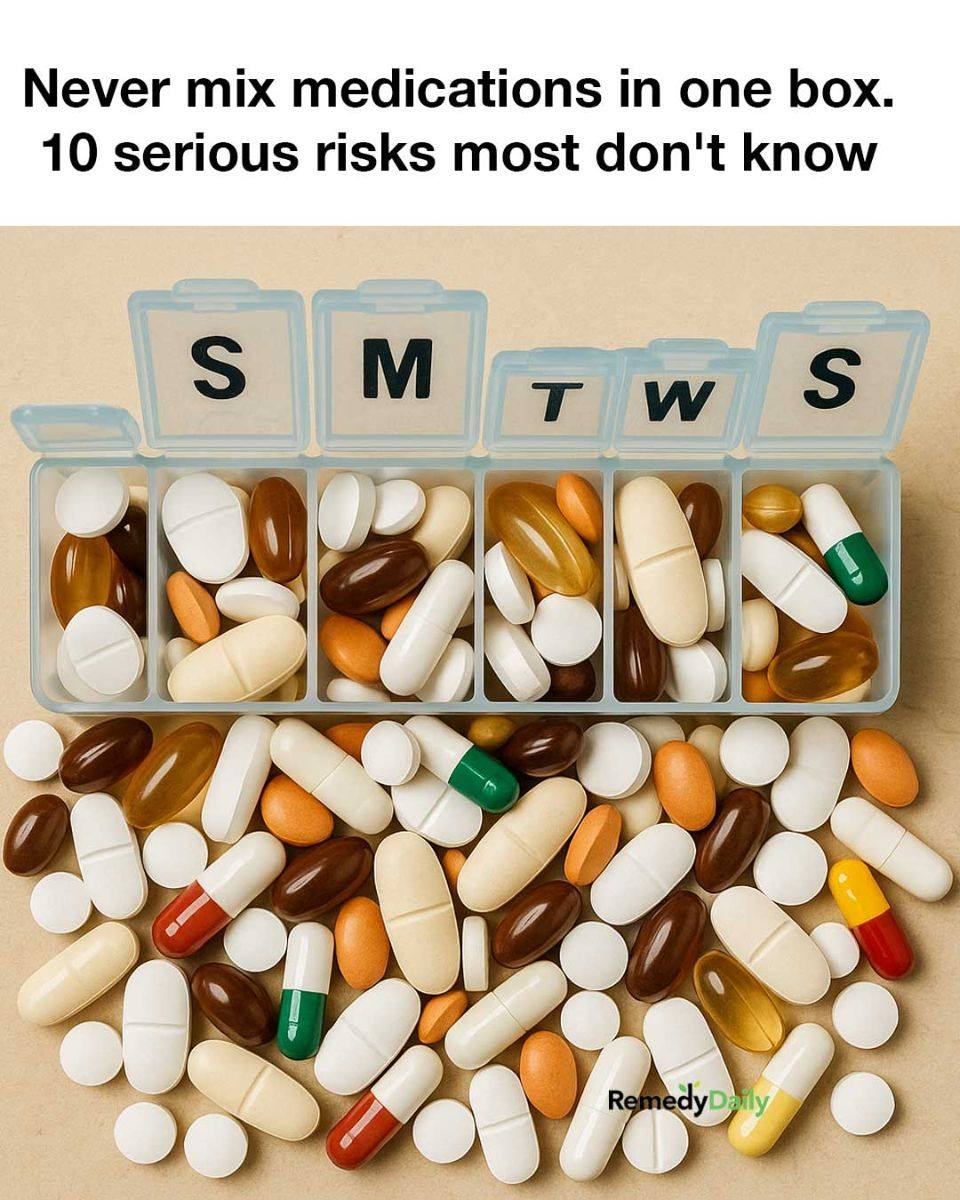
6. Cross-Contamination
Cross-contamination happens when particles or residues from one medication mix with another, potentially altering their safety or effectiveness. This risk increases when pills are loose in the same container without protective barriers.
For sensitive medications like insulin or immunosuppressants, even small contamination can impact dosing accuracy or cause unexpected reactions. Cross-contamination may also introduce allergens or irritants.
To avoid this, always store medications in their original sealed containers or in organizers with individual, sealed compartments.
7. Expiration Date Confusion
When different medications are mixed, tracking expiration dates becomes challenging. Taking expired medications increases the risk of reduced effectiveness and, in some cases, toxicity due to chemical breakdown products.
For example, expired tetracycline antibiotics can degrade into substances harmful to the kidneys. Without clear labeling, it is easy to overlook expired pills, especially in mixed containers.
Retaining medications in their original packaging ensures expiration dates remain visible and facilitates timely disposal.
8. Emergency Complications
In emergencies, healthcare providers need accurate information about the medications a patient is taking to make safe treatment decisions. Mixed medications without labels or original packaging complicate this process.
If a patient is unable to communicate, emergency responders may not identify critical medications such as blood thinners, insulin, or anticonvulsants. This can delay lifesaving interventions or result in harmful drug interactions.
Organizing medications clearly and keeping an updated medication list accessible is essential for effective emergency care.





