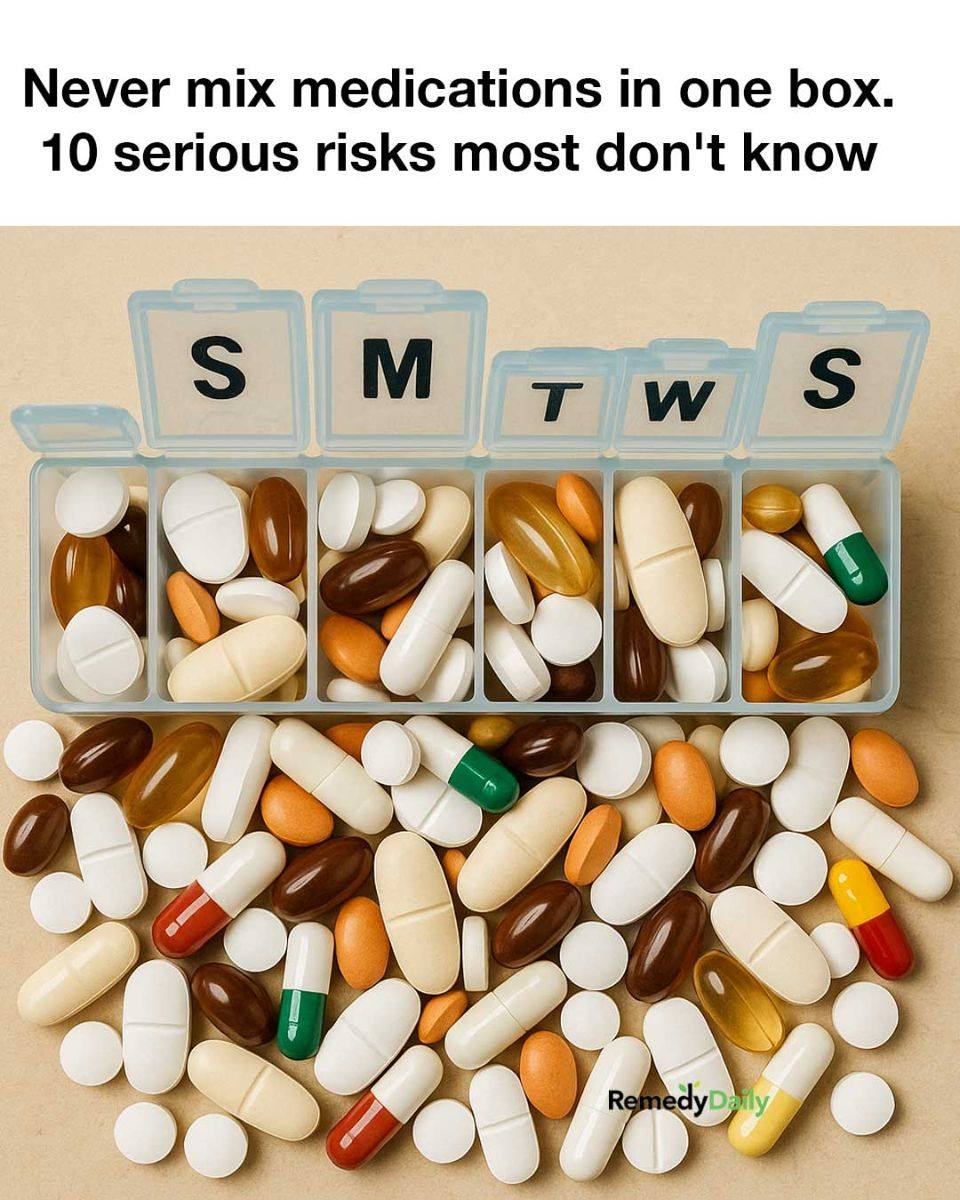
1. Chemical Reactions Risk
Medications contain active ingredients designed to remain chemically stable within their original packaging and storage conditions. When different medications are mixed in a single container, these compounds can interact chemically. Such interactions may alter the structure of the drugs, potentially creating harmful byproducts or degrading the effectiveness of one or more medications.
For example, certain antibiotics or hormonal drugs are sensitive to pH changes or moisture, which can be introduced by contact with other pills. Even minor chemical changes can shift a drug’s potency, especially for medications with a narrow therapeutic window—where the difference between an effective dose and a toxic dose is small.
To prevent these risks, medications should always be stored separately in their original containers or in pill organizers with individual, sealed compartments.
2. Overdose Potential
When multiple medications are combined in one box, it becomes challenging to track exactly which pills have been taken and when. Similar-looking pills or unclear organization can lead to accidentally taking an extra dose or the wrong medication altogether.
Overdosing on certain drugs can have serious or even fatal consequences. For instance, an overdose of acetaminophen (paracetamol) can cause liver failure, while excessive intake of blood-thinning agents such as warfarin can result in life-threatening bleeding. In elderly patients or those managing multiple chronic conditions, the risk of medication errors increases significantly with mixed storage.
Maintaining a clear, organized medication regimen with labeled compartments or original packaging reduces the chance of accidental overdose and helps ensure doses are taken as prescribed.





