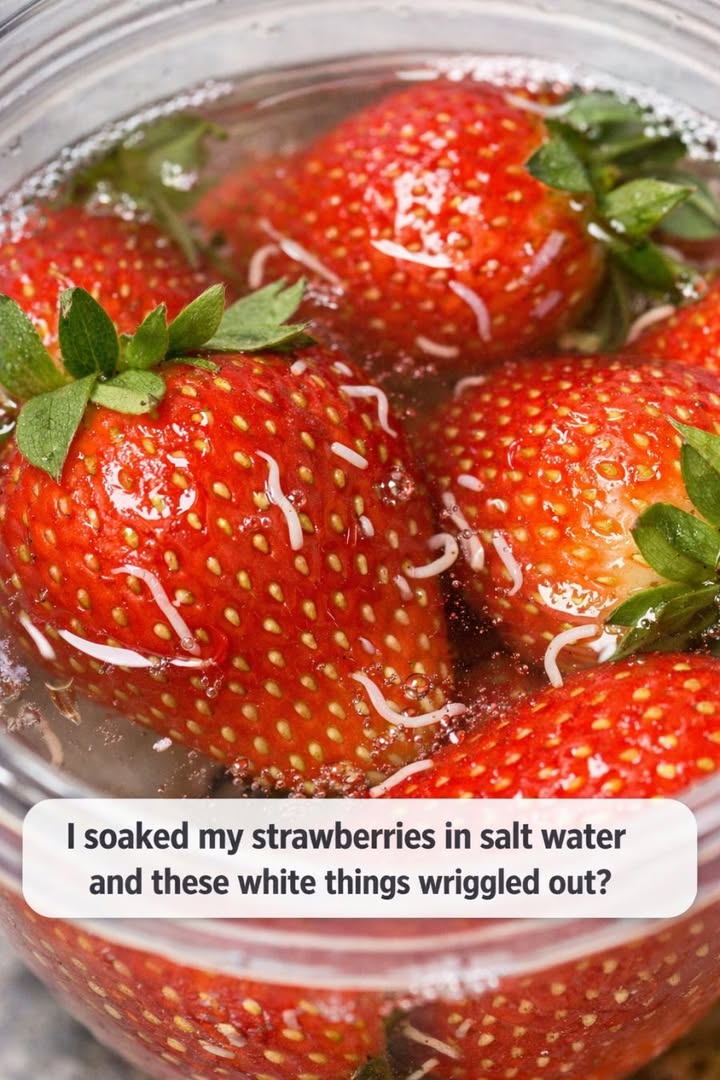
3. Salt water soaking effect
Soaking strawberries in salt water exploits the sensitivity of SWD larvae to environmental changes. A typical solution uses about 1 tablespoon of salt per cup of water. When submerged, the osmotic pressure difference causes water to be drawn out of the larvae’s bodies, distressing them.
This stress triggers the larvae to leave the fruit in search of a more suitable habitat, causing them to wriggle out into the water where they become visible. This method is often used to reveal infestations that might otherwise go unnoticed.
4. Health risks of larvae
Although the idea of consuming larvae can be unsettling, SWD larvae are generally not harmful to humans. They do not transmit any known pathogens and accidental ingestion is unlikely to cause illness.
However, their presence can indicate that the fruit is past its optimal freshness, which may affect taste and texture. Proper inspection and cleaning can help ensure the fruit is enjoyable and safe to eat.
5. Prevalence in store-bought vs home-grown
SWD infestation rates vary by region, climate, and season. In areas with established SWD populations, both commercial growers and home gardeners may encounter this pest. Store-bought strawberries can occasionally harbor larvae, especially if sourced from affected regions.
Commercial growers often implement rigorous pest management techniques to reduce infestation risk before the fruit reaches consumers. Home gardeners may face higher exposure due to less intensive control measures.





