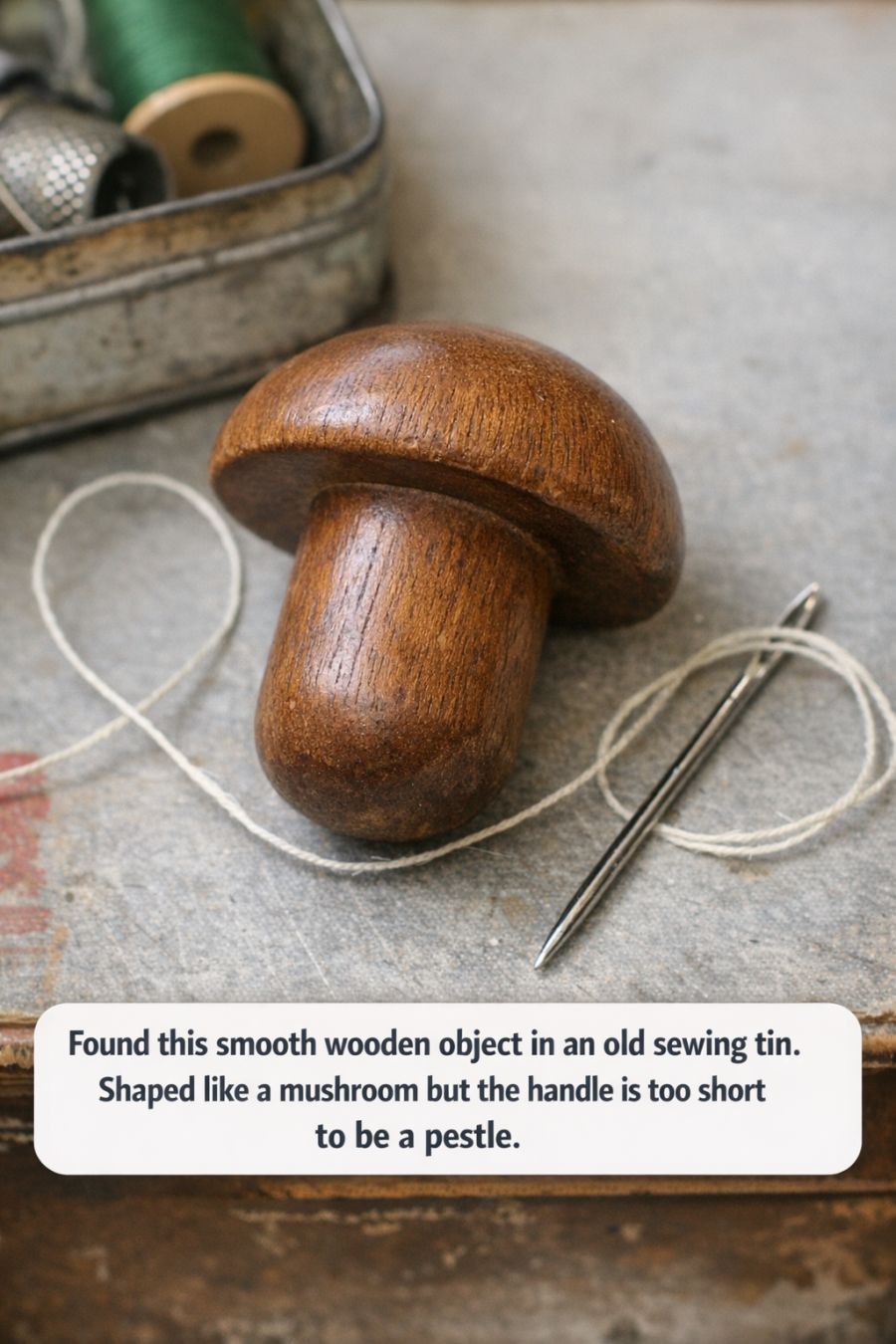
6. Context of old sewing tins
Old sewing tins often serve as time capsules, containing a mix of practical tools and sentimental keepsakes. The inclusion of a darning mushroom among needles, thimbles, and spools of thread reveals a domestic environment where repairing clothing was routine.
These tins were passed down through generations, accumulating items that reflect both daily needs and personal histories. Each tool inside provides insight into the sewing practices and values of a particular era, illustrating how households managed resources before mass-produced clothing became prevalent.
7. Variations of darning tools
Besides the darning mushroom, other tools like darning eggs were commonly used. These egg-shaped devices serve a similar function, offering a rounded surface to support fabric during repairs. The choice between mushrooms and eggs often depended on personal preference or the specific garment being mended.
Darning tools came in various sizes and materials, including wood, bone, and plastic. Some were plain, while others were ornately carved or painted, reflecting the cultural and aesthetic tastes of their owners.
8. How to use a darning mushroom today
Using a darning mushroom today involves these basic steps:
- Place the hole or worn area of the sock or stocking over the mushroom’s rounded cap.
- Stretch the fabric evenly until it is taut but not overstretched, centering the damaged area.
- Thread a darning needle with yarn or thread matching the fabric’s color and texture.
- Sew vertical stitches across the hole, anchoring into undamaged fabric on either side.
- Weave horizontal stitches over and under the vertical ones, creating a woven patch that mimics the fabric’s original structure.
This method reinforces the fabric, making the repair durable and visually consistent with the rest of the garment.





