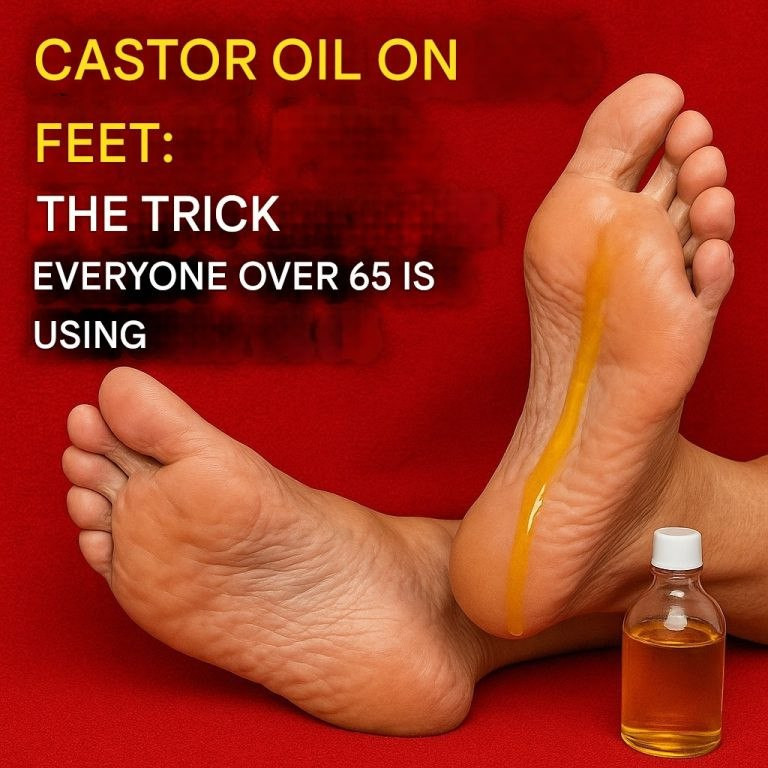
1. Deep hydration
Castor oil is rich in ricinoleic acid, a fatty acid that helps the skin retain moisture by creating a protective barrier. This makes it especially effective for relieving dry, cracked skin on the feet, a common issue for people over 65 due to reduced oil production and environmental exposure over decades.
While scientific evidence specifically on castor oil’s moisturizing effects on feet is limited, traditional use supports its role in softening rough, dry skin. It penetrates deeply into the epidermis, improving skin texture and elasticity.
To use for hydration, warm a small amount of castor oil in your hands and massage it thoroughly into the feet, focusing on heels and soles. Ideally, apply it nightly before bed and cover with cotton socks to lock in moisture. Continue this routine for several weeks to notice significant skin softening.
- Use about one tablespoon per foot.
- Massage for 5-10 minutes to aid absorption.
- Wear socks overnight to enhance effectiveness.
- Discontinue if skin irritation occurs.
2. Pain and inflammation relief
Ricinoleic acid also possesses anti-inflammatory properties, which may reduce swelling and discomfort associated with foot pain, including mild arthritis or plantar fasciitis. Applying castor oil can soothe inflamed tissues and provide a calming effect.
Evidence for castor oil’s anti-inflammatory benefits comes mostly from laboratory and animal studies, not high-quality human trials. Nevertheless, its traditional topical use for joint and muscle pain remains well-regarded.
To harness this benefit, apply warm castor oil to painful areas of the foot and massage gently for 5 to 10 minutes. Performing this at night may allow for prolonged absorption and relief. Continue daily use for up to 4 weeks, monitoring symptoms.
- Warm the oil slightly before application.
- Massage with gentle circular motions.
- Avoid broken skin or open wounds.
- Consult your doctor if pain persists or worsens.





